Hi everyone, welcome to the second urban agriculture certificate course from CultivAction Solidarity Cooperative. Erik Chevrier, Ph.D. and Mohammed Al-Duais will be your instructors for the course.
Where to Meet
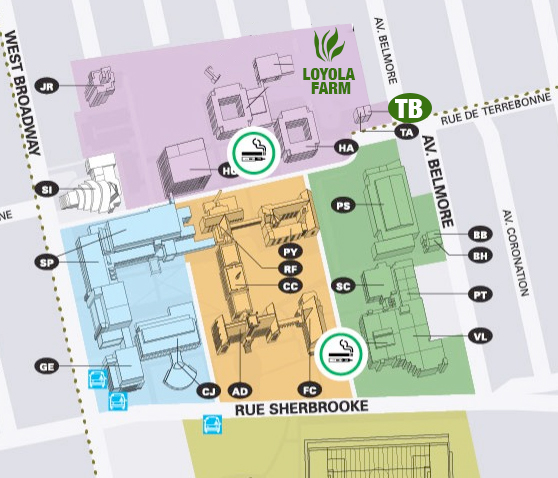
If it is not raining, we will meet at the farm at Loyola Campus. If it is raining, we will meet in the SC Building on the top floor in a space called The Hive.
The Loyola Farm is located at the back of Concordia University, Loyola Campus – TB building. 7079 Rue de Terrebonne, Montreal, Quebec H4B 1E1. The Hive is located in the SC Building.
In our second session, participants will deepen their understanding of advanced urban agriculture techniques, reflect 2024 recent readings, et apply new concepts to refine their garden designs. We’ll explore how approaches like permaculture, foraging, et SPIN farming can shape small-space et community-based food production.
Schedule:
1. Introduction & Check-In
– Welcome back et personal updates – Prompt: “What’s one garden-related observation or question you’ve had since last class?”
2. Reading Discussion: Biofortification et Ecological Complexity
– Small-group et full-class discussion – Key prompts: • How do these readings connect to food justice et agroecology? • What assumptions do they challenge or reinforce about ‘solutions’ to food insecurity? • How can concepts of ecological complexity be applied to a garden like ours?
3. Advanced Urban Agriculture Practices
– Brief interactive discussion about: • Balcony et container gardening • Agroecology principles • Permaculture design (zones, ethics, et principles) • Urban foraging (ethics, safety, et examples) • Edible urban design et integrating food into public space • SPIN (Small Plot Intensive) farming techniques – Group discussion: What ideas or practices could we integrate into our own garden?
4. Applied Garden Design Session
– Return to garden plans with new lenses (permaculture zones, SPIN layout, edible design, etc.) – Collaborative work in small groups to refine or expand original garden designs – Optional: sketch overlays, identifying edible perennials, or site-specific foraging opportunities
5. Hands-On Garden Work
– Tasks may include: • Preparing garden beds and designing (or building) reinforcing structures • Mapping out potential SPIN methods • Planting seeds or plants

 Français du Canada
  English (Canada)