Cultivaction
[agrikon_wc_ajax_search]

Bienvenue à Cultivaction

Urban Agroecology Course (Senneville)

La CultivAction Urban Agroecology Senneville Course is a hands-on program for beginner and intermediate growers who want to build practical skills, deepen ecological knowledge, and grow food confidently in urban and suburban spaces. Whether you’re just starting out or looking to refine your practice, this course offers seasonal, experiential learning grounded in real growing conditions at CultivAction’s Senneville farm.

Participants develop the skills to cultivate food in a variety of urban environments — from yards and balconies to community and collective gardens — while applying concepts learned both on-site and in their own growing spaces. Each student receives an individual plot at the farm, accessible during class sessions and designated volunteering hours, allowing for a season-long, hands-on experience managing and harvesting crops from start to finish.

Along the way, you’ll be introduced to agroecology — an approach to growing food that works with nature while strengthening communities. Agroecology emphasizes healthy soil, biodiversity, ecological balance, and the idea that how we grow food shapes access, equity, and care for the land. You’ll see how even a small garden contributes to larger food systems, local resilience, and community well-being.

Just as important as what we grow is how we grow together. The course fosters a supportive learning community, where participants share successes, challenges, experiments, and discoveries throughout the season. Through guided instruction and peer learning, you’ll build not only technical skills, but confidence, connection, and collective capacity.

By the end of the course, participants leave with practical skills, ecological knowledge, and the confidence to cultivate food — and community — wherever they grow. Whether transforming your own yard into an edible landscape or contributing to a thriving shared farm, this program equips you to create positive change in your home, neighbourhood, and local food system.

Come grow with us at the Senneville Farm.

QUESTIONS?

SUIVEZ-NOUS !

This course runs biweekly on Saturdays from 3:00 p.m. to 6:00 p.m., from May 2 to October 3, 2026. The schedule accommodates participants using train et collective taxi services. If Saturday afternoons don’t fit your schedule, explore our Online Urban Agriculture Mini Course or our Tuesday courses at Loyola or Wednesdays in Senneville.

Class Dates:

1. May 2, 2026

2. May 16, 2026

3. May 30, 2026

4. June 13, 2026

5. June 27, 2026

6.July 11, 2026

7. July 25, 2026

8. August 8, 2026

9. August 22, 2026

10. September 5, 2026

11. September 19, 2026

12. October 3, 2026

Pricing and Registration​

Cost for community members

Get Early Bird Rates!
$900
 (Register With a Friend and Both Pay Early Bird Rates)
$1000 (after March 23, 2026)

Pricing includes access to a collective garden space and food baskets once harvests begin.

Cost for Concordia Students

As a fee levy contributor, Concordia University students can take advantage of our special subsidized rate and pay just $350 for registration!

Accessibility

Nous donnons la priorité à l'accessibilité de la communauté tout en garantissant une rémunération équitable à nos travailleurs. Les personnes qui ne sont pas en mesure de payer l'intégralité des frais ont deux options :

  1. Faire un Affordability Rate Request   
  2. Apprendre par Le bénévolat 

A propos du cours

The Urban Agroecology Certificate Program runs biweekly from May through October. Across 12 sessions, participants engage in hands-on training designed to build practical skills and deepen their understanding of urban agroecology.

This program welcomes both beginner and intermediate gardeners and urban farmers. Beginners gain the foundational skills to start growing food in urban spaces, while intermediate participants can refine their techniques and expand their knowledge of sustainable urban food production. Whether you aim to transform your property into an edible landscape, steward a community garden, or strengthen your urban farming practice, this certificate provides the tools, techniques, and confidence to take your skills to the next level.

A central feature of the program is that each participant receives their own garden plot in the open fields at Senneville Farm, as well as an additional plot in the farm’s largest greenhouse. This dual setting allows you to gain practical experience in both outdoor and protected growing environments across the full season.

Participants are introduced to well-established models of collective vegetable gardening and will visit community gardens in Sainte-Anne-de-Bellevue to learn how urban agriculture initiatives strengthen local food systems and community resilience.

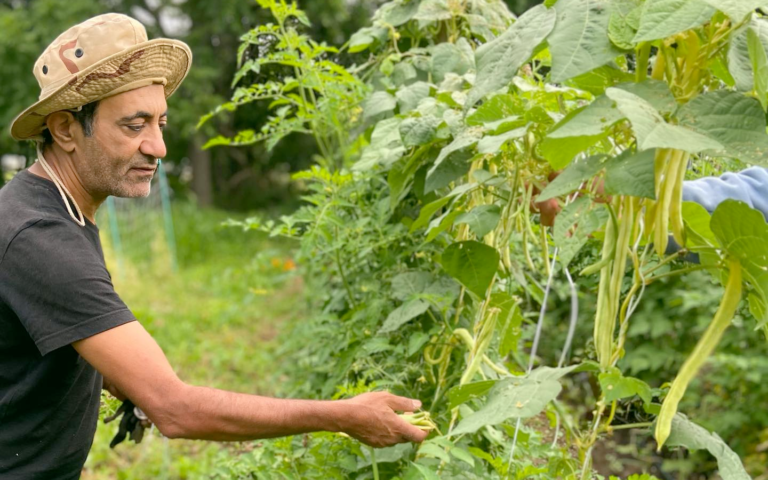
You may choose to cultivate your plot independently or collaborate with fellow participants. Throughout the program, you will apply course concepts directly in the field — developing skills in soil health, composting, crop planning, irrigation, garden maintenance, and seasonal transitions — all within a supportive, community-based learning environment.

Beyond hands-on growing skills, the program explores advanced urban agriculture topics such as crop planning, companion planting, greenhouse and garden design, season extension, and sustainable strategies for maximizing food production in small spaces.

Participants also examine ecological approaches to supporting pollinators and enhancing backyard biodiversity, develop an understanding of perennial food systems, and gain practical experience in mushroom cultivation, microgreens and sprout production, and natural liquid fertilizers. The course further covers techniques for harvesting, preserving, and sharing surplus produce — helping you extend the impact of your garden beyond the growing season.

Throughout the season, students gain real-world experience managing a productive plot, while connecting with peers and learning in an active, cooperative environment that emphasizes both community and self-paced growth.

If Saturdays do not fit your schedule, consider our Online Urban Agriculture Course or our Tuesday sessions at the Loyola Campus of Concordia University.

Class Topics Inclue

  • Introduction to urban agriculture, permaculture, and food systems
  • Building healthy soil: composting, mulching, plant support, and recycling garden materials
  • Planification des cultures et semis d'accompagnement
  • Soil assessment and testing; building trellises and other garden structures
  • Seeding, thinning, and transplanting seedlings; creating eco-friendly gardens
  • Garden maintenance: irrigation, weeding, and general care
  • Garden and backyard greenhouse design; season extension techniques
  • Annual crops and crop rotation strategies
  • Maximizing food production in small spaces; supporting backyard biodiversity (birds and pollinators)
  • Natural solutions to common garden problems
  • Perennial food forest foundations and mushroom production in diverse settings
  • Approches de l'économie sociale en matière d'agriculture urbaine
  • Harvesting, preservation, packaging, and surplus distribution or gifting
  • Saving seeds and rhizomes for future planting
  • L'hivernage de votre jardin
  • Community engagement: harvest parties and donation of crops, seeds, and seedlings
  • Bonus access to additional guest lectures at the downtown campus on Tuesday evenings. 
  •  

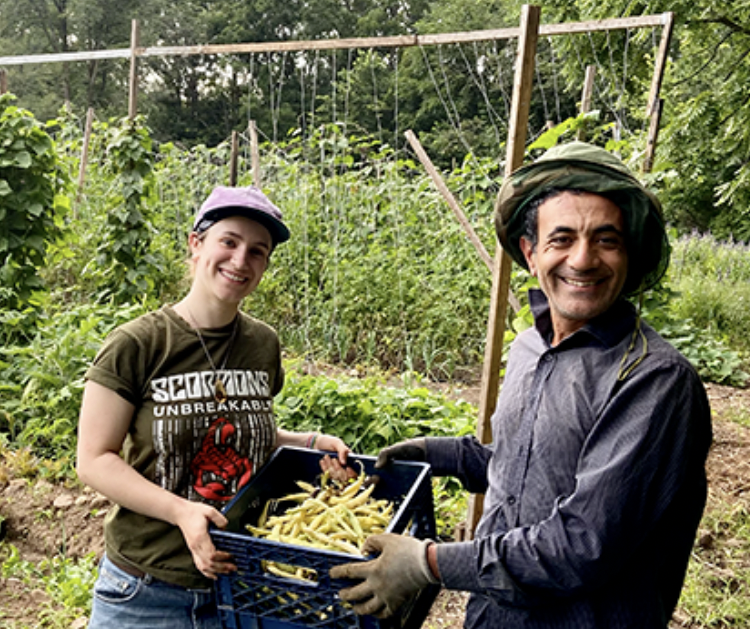
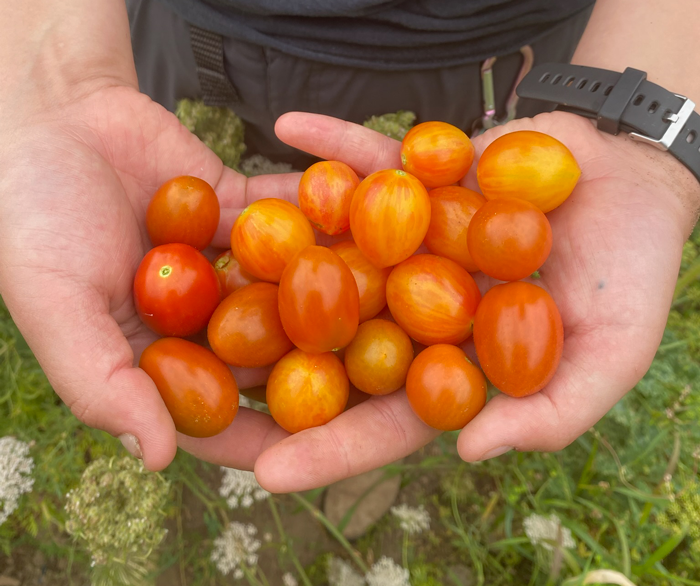
As part of the immersive experience, students harvest fresh produce from their farm plots as it ripens and take home weekly baskets filled with their harvest. This hands-on approach allows participants to directly apply what they learn in class while enjoying the tangible rewards of their work. By connecting classroom instruction with real-world practice, the program offers a practical, engaging, and enjoyable way to learn urban agroecology from seed to harvest.

About the Instructor

MOHAMMED AL-DUAIS, PhD, Professeur à temps partiel à l'Université Concordia

Dr. Mohammed Al-Duais is a biologist specializing in plant ecology and phytochemistry, with over 17 years of experience in sustainability, agroforestry, and nature conservation. He has led projects benefiting smallholder farmers and underserved communities in Canada and the Middle East.

Dr. Al-Duais earned his Ph.D. from Friedrich Schiller University, Germany, and has held roles as an Assistant Professor at Ibb University, Director of the Foundation for Endangered Wildlife (Yemen), and Natural Science Specialist at UNESCO Doha. He was a Fulbright fellow at the University of Rhode Island and later conducted phytochemical research at Friedrich Schiller University.

Dr. Al-Duais is also the CEO of Permaculture Sainte Anne de Bellevue (PSADB), a nonprofit funded by the Moving Towards Sustainability initiative of Sainte Anne de Bellevue municipality. Through PSADB, he has led several urban agroecology projects, including the Duff-Court Neighborhood Life Committee urban farm and two other urban gardens in Montreal. Additionally, he serves on Montreal’s food literacy committee, contributing to local food security efforts.


Location - Senneville Farm, Chantal Chalet and Gardens in St. Anne de Bellevue

The course will take place at several garden sites in Sainte-Anne-de-Bellevue, as well as at the Senneville Farm. Indoor sessions—particularly in the event of rain—will be held at the Chantal Chalet in Parc Godin.

The Senneville Farm is located at 265 Senneville Road.

Please note that the directions provided here are based on those used by Santropol Roulant, a neighbouring farm.

×
fr_CAFrançais du Canada